Addressing forest loss in Tropical Asia
The Forest Governance Project, funded by the EU Commission was developed to strengthen effective engagement of non-state actors in forest monitoring, planning and policy processes in four countries in Tropical Asia, Malaysia, Indonesia, the Philippines and Papua New Guinea. We are delighted to disseminate the latest publication about Forest Change in Tropical Asia.
The project area contains nearly 15% of the world’s tropical forests, which play vital roles in biodiversity conservation, global carbon balance and provision of a range of ecosystem services. These forests are suffering very rapid conversion and degradation of natural habitats, and much of the lowland forests in particular have and are being extensively cleared for agricultural expansion (including oil palm), illegal logging, shifting cultivation and infrastructure development, driving declines and extirpations of many animal and plant populations; since 2000, around 16% of tree cover has been lost across the four countries.
This storymap illustrates the extent of forest loss across each of the four countries, the drivers of change, and the value of good governance in addressing these challenges; non-state actors play a key role, facilitated by a range of creative tools and approaches, including mixing science, traditional and indigenous knowledge, technologies and evidence-based policy-making, building capacity and networks and sustaining advocacy.
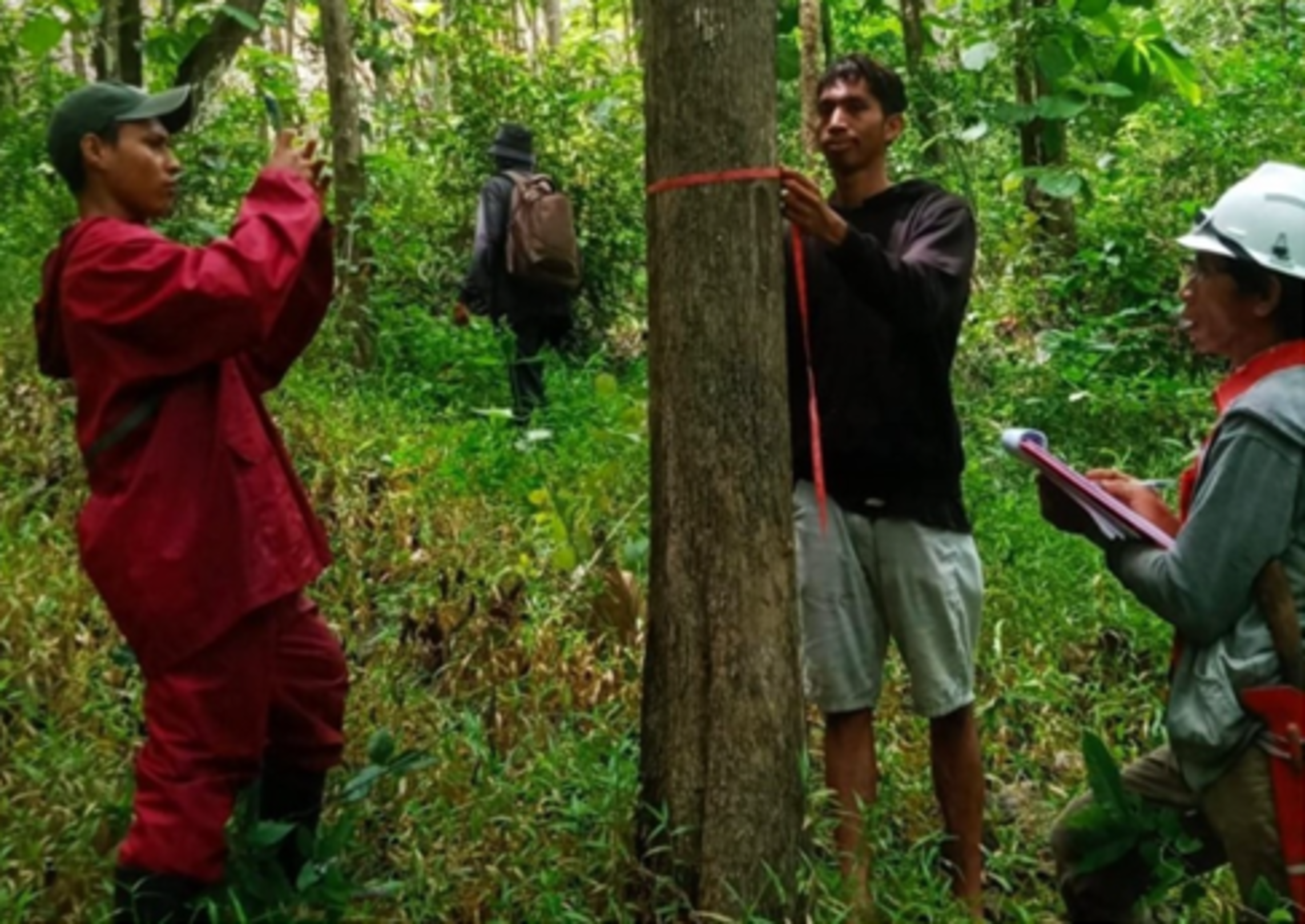
Header image: A Teak farmer’s group in Mbeliling Landscape, Flores, Indonesia conducting a tree inventory to support implementation of certification requirements.